The Nigeria Customs Service (NCS) has intensified its capacity-building efforts as two of its strategic Commands, Kano/Jigawa and Borno/Yobe, hosted participants of Junior Course 24 from the Nigeria Customs Command and Staff College (NCCSC), Gwagwalada, on Operational Study Tours (OSTs) focused on inter-agency collaboration and border security.
The study tours, held from April 6 to 10, 2026, brought students face-to-face with real-time operational environments under the theme: “Customs Protecting Society Through Effective Inter-Agency Collaboration and Border Control.”
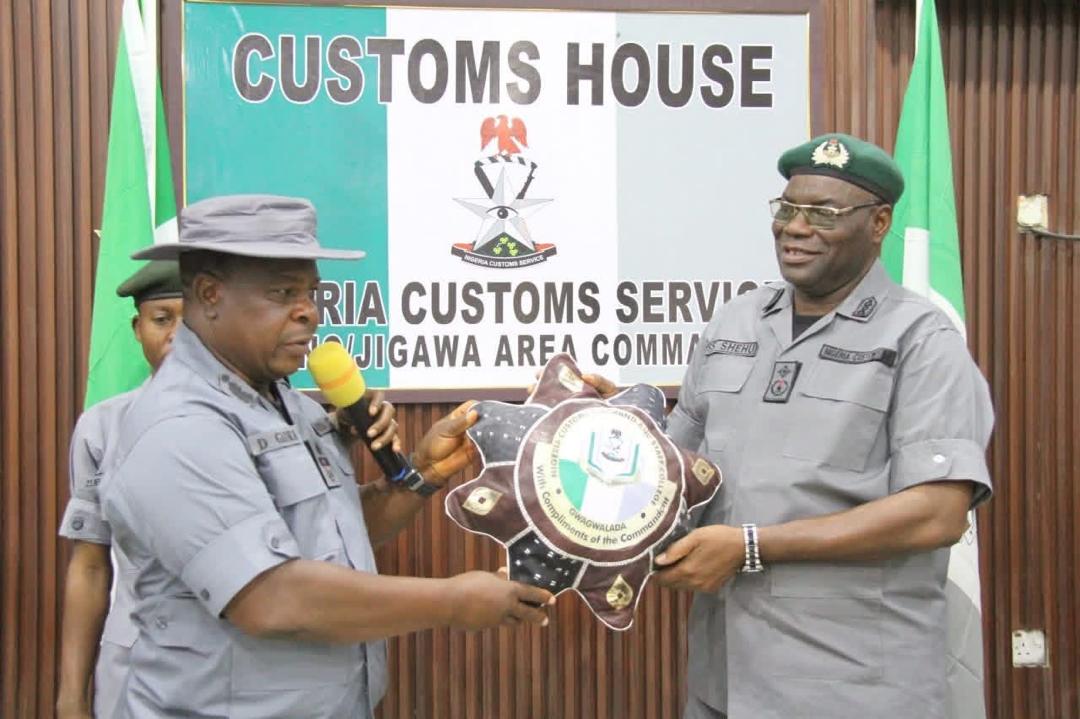
At the Kano/Jigawa Area Command, the delegation, led by the Commandant of the College, Assistant Comptroller-General (ACG) Duwoh Gaura, engaged officers and stakeholders in activities aimed at deepening their understanding of Customs operations across diverse formations.
Describing the exercise as vital to professional development.
“The Operational Study Tour provides students with first-hand knowledge of field operations and exposes them to the administrative and operational realities of Commands. It is a critical component of the Junior Course curriculum.” He noted.
Welcoming the delegation, the Acting Customs Area Controller, Deputy Comptroller of Customs (DC) Usman Adamu, represented by DC Administration Sulaiman Shehu, commended the Comptroller-General of Customs, Adeniyi, for prioritising training and human capacity development.
“This Command provides a unique operational environment, with bonded terminals, an inland dry port, an international airport, excise factories, free trade zones, and an international land border. Inter-agency collaboration remains essential to achieving effective border control and national security,” he said.
During the tour, participants visited key operational locations, including the Mallam Aminu Kano International Airport and Maigatari Border Station in Jigawa State, as well as the Nigeria Immigration Service e-surveillance facility. They also engaged with the National Drug Law Enforcement Agency (NDLEA), the Economic and Financial Crimes Commission (EFCC), and the National Agency for Food and Drug Administration and Control (NAFDAC), where they observed practical examples of inter-agency synergy.
Similarly, at the Borno/Yobe Area Command, Group 1 of the course conducted an intensive study tour focused on border security operations in a complex security environment.
Welcoming the delegation, the Customs Area Controller, Comptroller Idris Abdullahi, highlighted the strategic importance of the Command’s location in Nigeria’s North-East.
“The theme of this study tour reflects our daily operational realities. With our proximity to international borders and ongoing counter-insurgency operations, inter-agency collaboration is not just important, it is indispensable to achieving effective border control and national security,” he stated.
Participants received detailed presentations from the Command’s management team on revenue generation, anti-smuggling operations, and border security challenges, followed by interactive sessions with principal officers.
As part of the field engagements, the students visited the Theatre Headquarters, North East Operation Hadin Kai at Maimalari Barracks, where they were briefed on joint military operations and intelligence sharing. They also toured the Nigeria Police Force Headquarters, the Department of State Services (DSS), and Nigerian Air Force units in Maiduguri, gaining insights into coordinated enforcement, intelligence fusion, and aerial surveillance support.
Across both Commands, participants commended the high level of collaboration among security and regulatory agencies, describing it as critical to addressing evolving border threats and safeguarding national security.
The study tours concluded with debriefing sessions, interactive engagements with principal officers, and the exchange of souvenirs, symbolising strengthened institutional ties between the College and field Commands.